
In 2008, the rallies held in “Azatutyun” Square were peaceful, with no signs of incitement to violence or violent actions, up until the early morning police operation on March 1, 2008: the Prosecutor General referred to the ECtHR judgment
07/05/2026
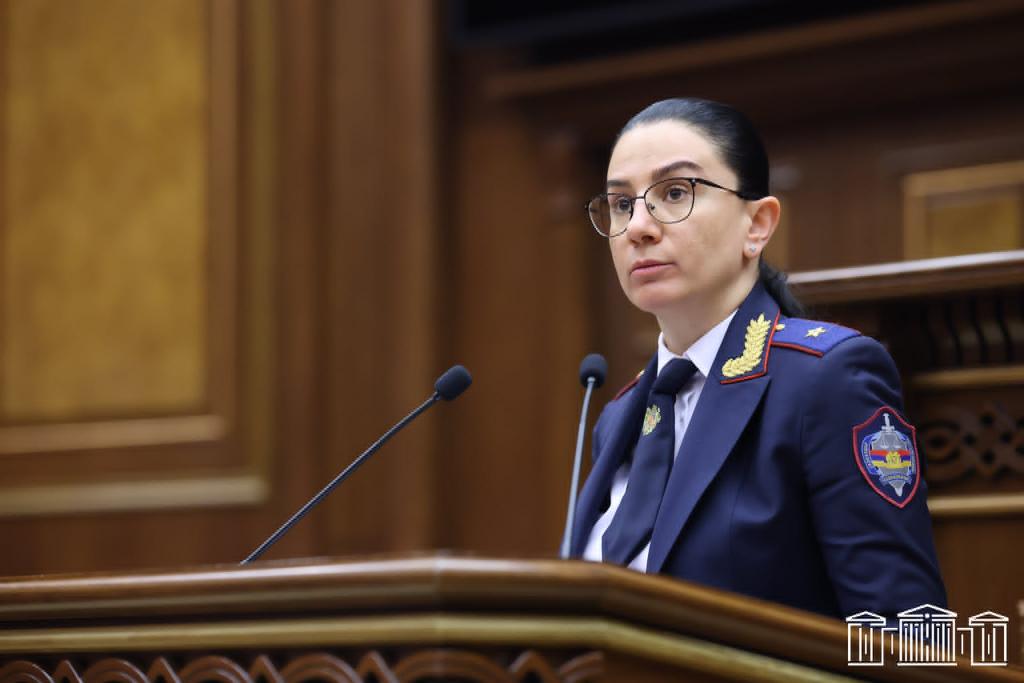
The Prosecutor General of the Republic of Armenia Anna Vardapetyan today delivered a concluding speech in the National Assembly of the RA while presenting the report on the activities of the Prosecutor’s Office of the Republic of Armenia for 2025, wherein, inter alia, she referred to the events that took place in Yerevan on March 1–2, 2008.
Anna Vardapetyan, in particular, stated:
“In paragraph 205 of the judgment in the case “Farmanyan and Others v. Armenia”, the Court noted that the rallies held in “Azatutyun” Square were peaceful, with no signs of incitement to violence or violent actions, until the early morning police operation carried out on March 1, 2008. The Court found that there was no convincing evidence establishing that weapons had been stockpiled in “Azatutyun” Square for the purpose of inciting unrest, and it rejected the Government’s claims that the police had been deployed in “Azatutyun” Square to search for weapons and that armed protesters had been the first to attack the police. The Court further found that the main—if not the sole—purpose of the police operation carried out in the early morning of March 1, 2008, was to disperse the assembly taking place in “Azatutyun” Square, and that the clashes that occurred there were most likely the result of police measures aimed at ending the gathering, including the alleged excessive use of force, rather than the result of deliberate actions by protesters. The Court also noted the absence of any evidence linking any of the allegedly discovered weapons in “Azatutyun” Square—including pistols, grenades, and sharp objects resembling “hedgehogs”—to any of the demonstrators, and found it remarkable that protesters did not use firearms, explosives, or cold weapons during the police operation in “Azatutyun” Square, given the allegation that they had been armed with such weapons with the intent of initiating an armed uprising.”
In paragraph 206 of the judgment, the Court found that the gathering of people around the statue of Myasnikyan occurred as a result of spontaneous and uncoordinated developments, whereas the earlier dispersal of protesters from “Azatutyun” Square—including its forceful nature—as well as a number of other similar or uncontrolled events that took place on the same day may have played a role in the subsequent escalation of violence, as opposed to a pre-planned and organized attempt at mass disorder or a coup. There was no convincing evidence supporting the Government’s claims that the protesters who used violence in the area were armed with firearms rather than improvised objects, nor any evidence establishing that the deaths were caused by actions carried out by the protesters intentionally or even negligently.
Following the analysis of the above findings and a number of other data, in paragraph 226 of the judgment the Court concluded that the absence of clear, detailed, and mandatory instructions regarding the use of tear gas grenades, the lack of adequate training and supervision, as well as the aforementioned issues related to the condition and deployment of tear gas grenades, significantly contributed to the improper use of crowd-control weapons in violation of safety rules, which resulted in the deaths of three persons.
In paragraph 227 of the judgment, the Court considered it beyond doubt that the deaths of the other five persons caused by firearms were attributable to the State.
The positions established in the judgments in the cases “Farmanyan and Others v. Armenia”, “Mushegh Saghatelyan v. Armenia”, “Myasnik Malkhasyan v. Armenia”, “Dareskizb LLC v. Armenia” and “Virabyan v. Armenia” provide grounds to conclude that the Court’s findings regarding the legal assessment of the events that took place in Yerevan on the night of March 1–2 are connected to the abuse of powers by officials involving violence, in which case there is a legislative prohibition on the application of statutes of limitation. In other words, this concerns an abuse of power accompanied by violence, which constitutes a non-prescriptible offence.
